Protector Ready: Active Threat Response Training
(AKA Active Shooter Response)
Duty-Carry Defense from Holster to Threat Neutralized
Live-Fire – for Security Officers, Existing School Safety Program Employees, Church Security Team Members – 8 hrs
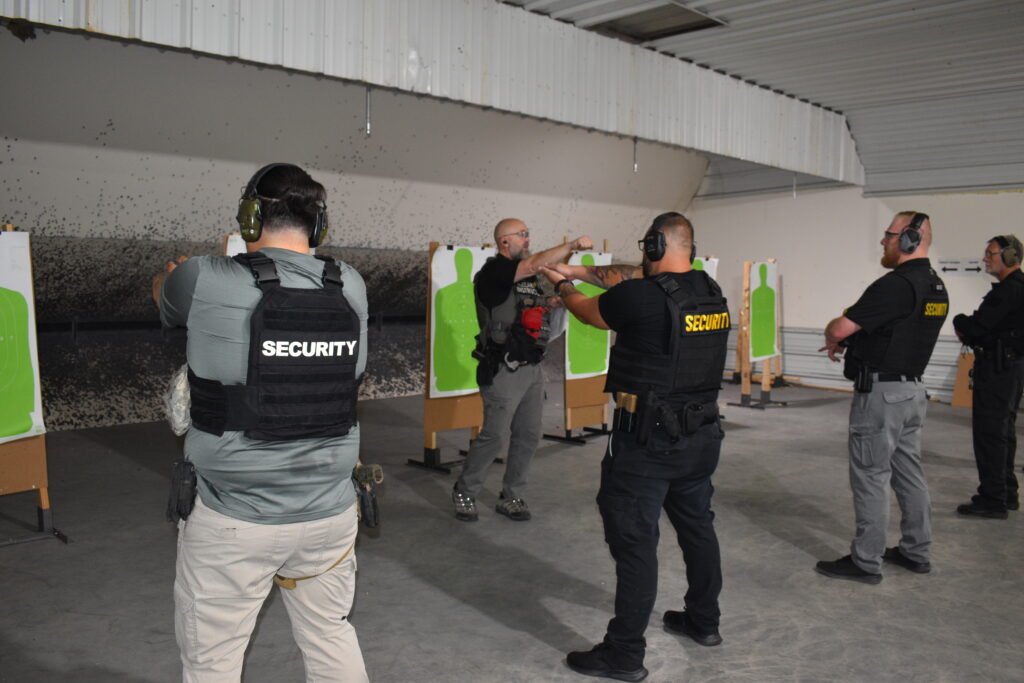
Protector Ready: Active Threat Response Training– for Security Officers, Existing School Safety Program Employees, Church Security Team Members – 8 hrs
Duty-Carry Defense from Holster to Threat Neutralized
- From holster draw to decisive threat stop: Advanced handgun response training for security personnel to detect, engage, and neutralize deadly threats quickly, responsibly, and effectively in protection-of-life scenarios.
- 8-Hour Live-Fire Course for Security Officers, School Safety Personnel, and Church Security Team Members
- From holster draw to decisive threat stop: Advanced handgun response training for security professionals to rapidly detect, engage, and neutralize deadly threats with precision, responsibility, and control in protection-of-life scenarios.
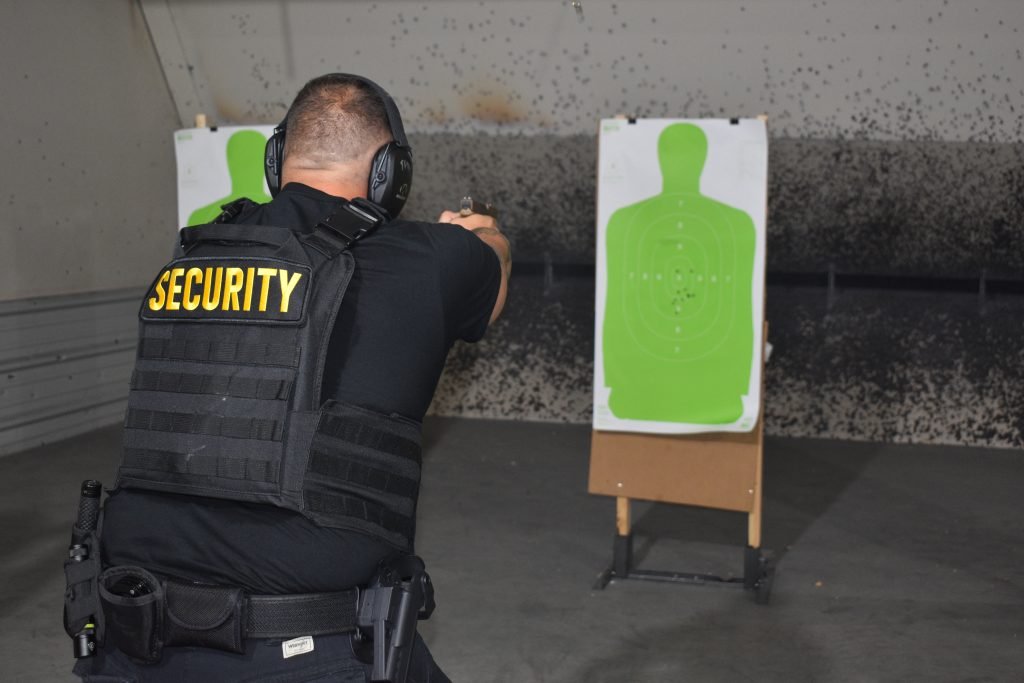
- Most armed-response programs rely on static range drills that fail under real-world stress. Protector Ready flips the script: 80% prevention & planning, 20% dynamic engagement under duress. Security personnel train live-fire from the holster in realistic, scenario-based drills—including movement to cover, verbal challenges, shoot/no-shoot decisions, failure-to-stop drills, and low-light transitions—building muscle memory that holds up in the chaos of an active threat.
Course Overview
Security professionals face high-stakes environments where hesitation costs lives. This course emphasizes proactive planning and decisive action:
- Escape — Clear civilians, create distance, draw only when cover is secured.
- Restrict — Control choke points, lock down sectors, coordinate containment.
- Defend — Engage from holster under pressure: scenario-based live-fire, shoot/no-shoot, failure-to-stop, low-light, and movement to cover.
Curriculum Modules
- Active Threat Profiles & Warning Signs: Identify behavioral red flags, pre-attack indicators, and threat assessment protocols.
- Tactical Response: Movement, Cover, & Engagement — Dynamic positioning, cover vs. concealment, pie-ing corners, and controlled pairs.
- Escape / Restrict / Defend Model: Structured decision tree for armed professionals—evacuate, contain, or neutralize.
- Texas Level 3 / LTC Shooting Qualification: All students must pass ≥225/250 on the Texas DPS B-27 target to advance to live-fire drills.
- From-the-Holster Training: Dry-fire draws, presentation, sight alignment; transition to live-fire under time pressure.
- Reloads & Malfunctions: Speed/tactical reloads, Type 1–3 clearances while moving to cover.
- Scenario-Based Training: Force-on-force (non-lethal) with role players, integrated with live-fire.
- Shooting Under Duress: Stress inoculation through physical exertion, low-light conditions, decision-making, and verbal challenges.
What to Bring
- Footwear that covers the entire foot
- Pants suitable for training with a belt
- Duty belt with holster and mag pouch
- Uniform shirt and body armor (if normally worn on duty)
- Handgun in clean, safe working order
- Proficiency required—unsafe gun handling results in immediate dismissal
- Minimum 3 empty magazines (semi-auto)
- Firearm transported in case/holster/bag to/from range
- 200 rounds brass-cased factory ammo (no reloads, no steel-cased, or steel core)
- Hearing protection (plugs or muffs)
- Eye protection
Prerequisites
- Current Texas Level 3 Commissioned Security Officer or LTC
- Demonstrated safe and proficient handgun operation
- Must pass initial qualification to participate in live-fire portions
Course Outcomes
Graduates emerge fully prepared to respond effectively and professionally to active threat events, safeguarding lives, reducing casualties, and fulfilling their duty as protectors in schools, churches, businesses, and other high-risk environments.
All Training is held at Proactive Defense Outdoor Gun Range & Training Center 13862 FM 1171 Northlake, TX 76262 in Argyle Tx